Reimagining the road to self-driving cars
Wayve challenges Silicon Valley with
a contrarian bet on autonomy
Reimagining the road to self-driving cars
Wayve challenges Silicon Valley with a contrarian bet on autonomy
The collaboration produced “SegNet,” a paper co-written with Roberto Cipolla that would become one of the most cited in computer vision. It showed that a single neural network could solve one of computer vision’s hardest problems — semantic segmentation — outperforming the brittle, hand-coded pipelines that dominated the field. The paper also set Kendall on a trajectory that now has him facing down the likes of Alphabet’s Waymo and Tesla over the future of autonomous driving.
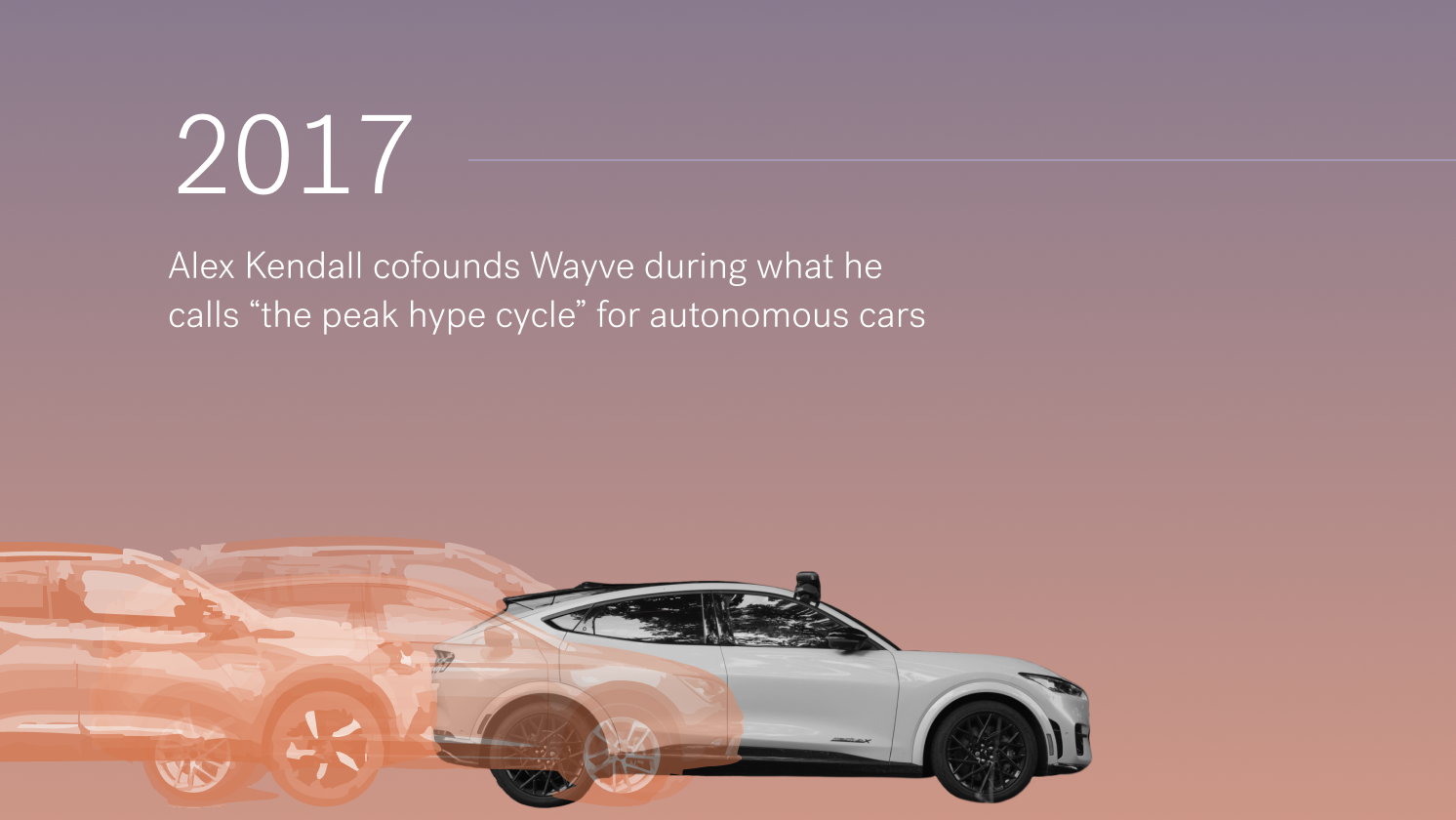
Kendall co-founded Wayve in 2017 while finishing his Ph.D. He was 25 years old. By then, Waymo had been working on autonomous vehicles for nearly a decade. Tesla, Uber, and Cruise/GM had collectively poured tens of billions of dollars into the technology. Kendall was arriving late to a race dominated by giants — and proposing an approach they had already rejected.

We were tens of people competing against teams of thousands. I never for a moment doubted that I was right.
From rule-breaker to role model
At the time, every industry leader was building autonomous vehicles the same way: a modular stack, with separate AI components to handle perception (seeing the world), prediction (anticipating what happens next), and planning (choosing the car’s next move). The approach seemed prudent and verifiable, backed by billions in R&D and embraced by the field’s top engineers.
Kendall was making a contrarian bet: a single neural network, trained through supervised and reinforcement learning, should be able to do the whole job. Rather than relying on high-definition maps, elaborate rule sets, and costly sensors like lidar and radar, Wayve’s cars would master driving primarily through cameras and AI. The analogy was human learning: Novice drivers might struggle at first, but once they know how to drive, they don’t need a new rulebook for every unfamiliar road; they generalize and are able to adapt to new situations. The result, Kendall believed, would be a system that was cheaper, more scalable, and better able to adapt to new environments.
“What we were doing was completely dismissed by the rest of the industry,” Kendall says. Rivals warned that Wayve’s approach wasn’t safe and derided it in blog posts as naïve or reckless. He was “laughed out the room” at a meeting of self-driving companies, Kendall says, and even Elon Musk mocked him during a chance encounter in 2018. “It was this very weird interaction,” Kendall says, “that had him lecturing me for an hour about how my approach was wrong and his was right.”
Challenging the status quo with end-to-end machine learning
Today, NVIDIA is among the companies promoting what some now call “AV2.0” — a shift toward the large, unified neural networks Wayve pioneered. Even competitors who publicly derided end-to-end machine learning, including Tesla, are now embracing it or quietly exploring it. Microsoft, like NVIDIA, is both a partner and an investor in Wayve. By the end of 2025, the company had struck deals with Uber and Nissan, one of the world’s largest automakers, and was in talks with nearly every global carmaker about embedding its AI-driver assistance technology in their cars, with the longer-term goal of level 5 full autonomy.
“He’s never worked anywhere beyond a couple of internships in the valley,” says Badrinarayanan, who reunited with his former graduate student when he joined Wayve in 2020. Kendall had never managed people. He had never had to raise a round of venture capital. “Yet somehow Alex has us competing with some of tech’s biggest players,” Badrinarayanan says.


An early passion for robots and a huge market opportunity
Long before Cambridge, Kendall was building machines for the physical world. He was around 15 years old when he built a drone that he used to chase the two sheep on his parents’ land in New Zealand. “Half my childhood was mountain biking and surfing and being outdoors,” he says. “The other half was building robots.” After earning an engineering degree at the University of Auckland, Kendall headed to Cambridge to study what he called “embodied intelligence”— the idea that intelligence emerges through action.
“I liked the idea of working with robots in the physical world,” he says. “Not just talking to you or acting like a search engine, but actually interacting in the physical world.”
“SegNet” proved a catalyst. The breakthrough convinced Kendall that end-to-end learning could work at scale with far less data than expected — just 300 labeled images from Cambridge generalized to road scenes around the world. That insight launched a burst of research applying the same approach to motion, geometry, depth perception, and uncertainty. While still working on his Ph.D., Kendall collaborated with augmented-reality companies, street safety firms, and drone makers. Each project helped sharpen his conviction that end-to-end learning could handle not just perception but decision-making itself. He had arrived at Cambridge intent on founding a startup. What remained unresolved was which kind of machine would become his proving ground.

He’s never worked anywhere beyond a couple of internships in the Valley, yet somehow Alex has us competing with some of tech’s biggest players.
From academic robotics to real-world autonomous vehicles
Cars offered the answer. They had the potential to become the most widely deployed robots on Earth, built by global giants with established distribution networks and a growing appetite for software that would differentiate them from rivals. Over the past decade, vehicles had quietly accumulated the prerequisites for advanced AI: computer-controlled steering, always-on sensors, and enough onboard compute to make split-second decisions. “It’s by far the biggest commercial opportunity in robotics,” Kendall says.
The market opportunity was matched by the stakes. More than one million people around the globe die each year in car accidents. More than half the fatalities are pedestrians and cyclists and disproportionately occur in low- and middle-income countries. Technology promised to slash those numbers. Beyond saving lives, it promised to give time back. “Think about the billions of hours humans waste every year commuting,” says Silvius Rus, a top systems engineer at Google who joined Wayve in 2023. “We’re giving some time back to humanity.”
Kendall was still writing his thesis when he closed on a $1.5 million seed round that included an investment from Ilya Sutskever, a co-founder of OpenAI and a legend in machine learning. Kendall rented a house near campus and bought a Renault Twizy, a cheap two-seater that felt more golf cart than automobile. “It was just a handful of my lab mates and me for the first few months,” Kendall says. Over the next six months, the team grew to 15 — enough to build a working proof of concept.
Kendall calls 2017 “the peak hype cycle” for autonomous cars. “Everyone thought it was a year away,” he says. Yet he was convinced that the technological approach dominating the field would never deliver the dream of full autonomy. “They thought of self-driving as an infrastructure and a hand-coded robotics problem,” he says of his better-known rivals. “I thought of it as an AI problem.”
Less than a year after its founding, Wayve released “Learning to Drive in a Day,” a time-lapse video of the Twizy navigating a remote country lane. It was the first-ever demonstration of reinforcement learning teaching a car to follow a path — no high-definition 3-D maps; no lidar; no hand-written rules. The only feedback came from a safety driver, who took the wheel when the car drifted toward the shoulder and steered it back to the middle of the road. Within 20 minutes, the car was motoring along the road at a normal speed.
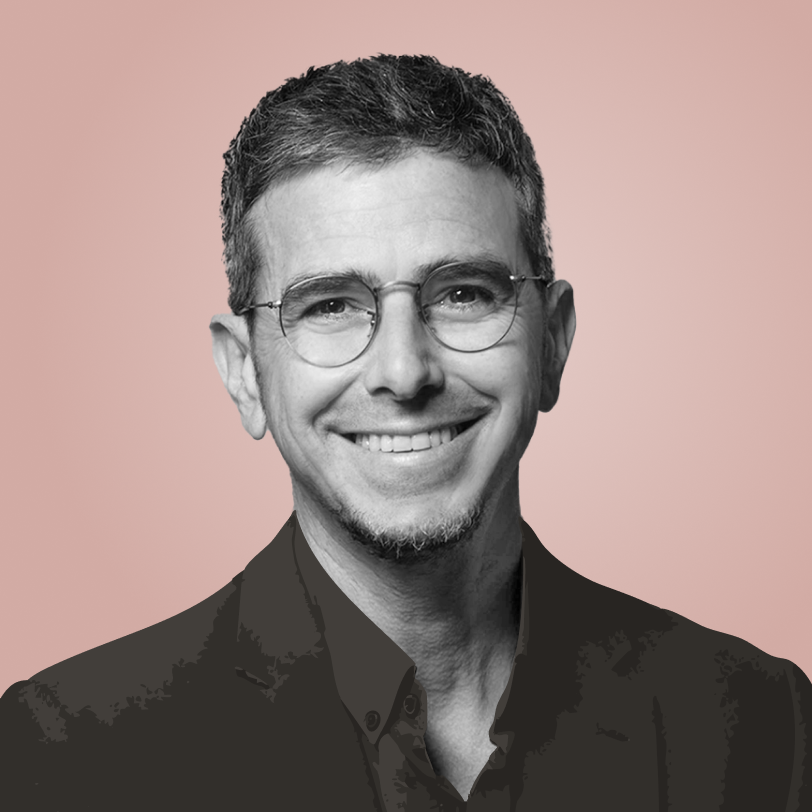
Our challenge now is establishing ourselves as a high-integrity automotive supplier with the technical integrity, dependability and reliability that car makers demand.
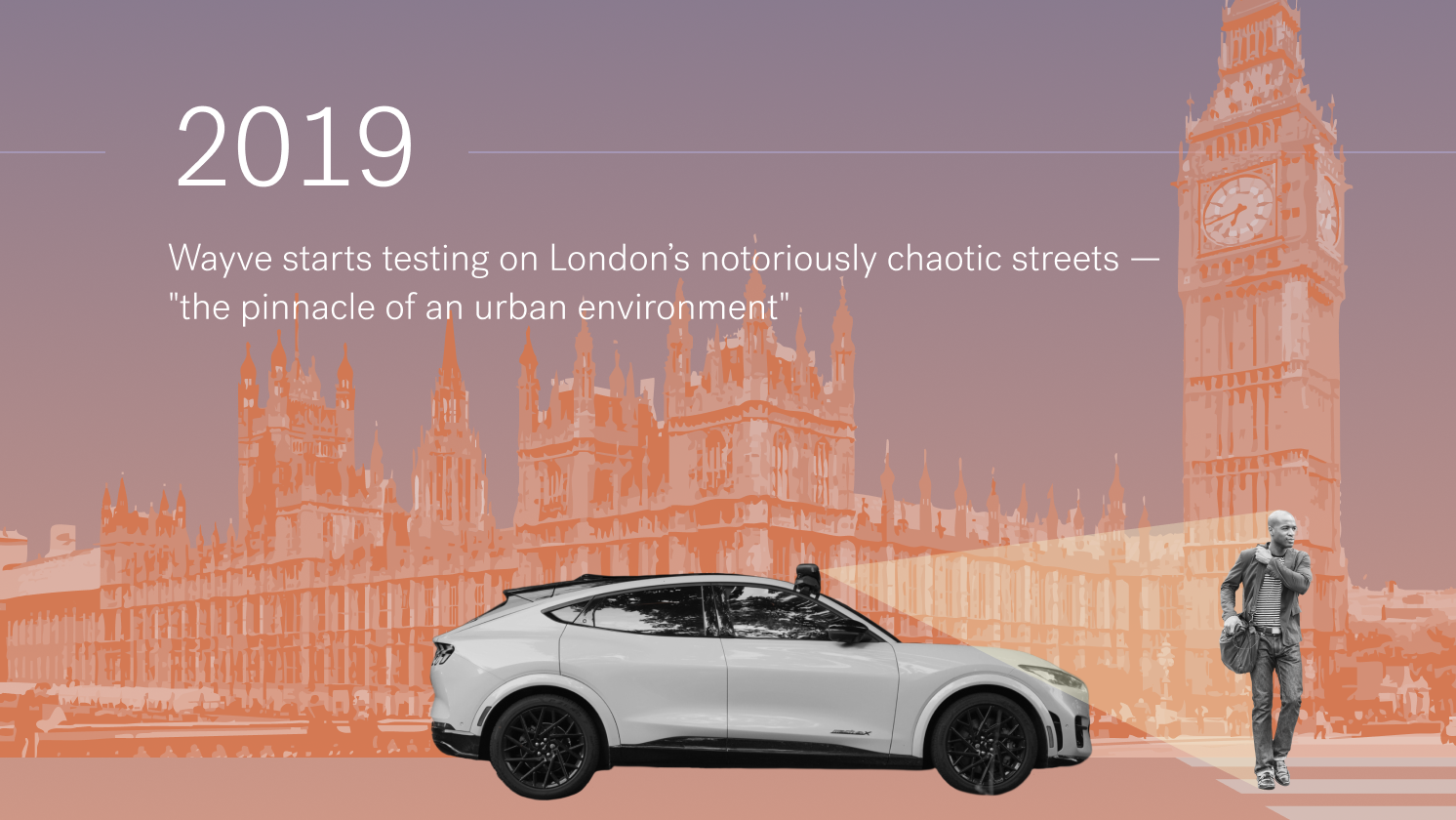
A $20 million Series A in 2019 included Yann LeCun, one of the world’s most distinguished AI researchers. That gave Wayve the money it needed to move to London, into offices that were down the road from Google’s DeepMind. London proved an ideal setting for a company built on the premise that Big Tech was taking the wrong approach to driverless cars. “We’re outside the thought bubble of Silicon Valley,” Kendall says, “making it easier to be contrarian.” UK regulators helped, too, by establishing a permissive testing regime that allowed deployment of vehicles on public roads. “That's been an accelerant for us in a highly regulated industry,” Kendall says.
Training autonomous vehicles in the hardest environments
Kendall’s contrarian instincts didn't stop at the technology. Incumbents favored orderly environments with grid-like streets and fewer distractions. Waymo, for instance, started testing driverless minivans in 2017 in suburban Chandler, Arizona, a community of wide, well-marked boulevards, orderly traffic, and predictable weather. Wayve instead began training its cars in central London, known for its narrow and winding streets, roundabouts, lane closures, fog, jaywalkers, cyclists, and even mounted police on horseback. “It was the pinnacle of an urban environment,” Kendall says. Industry wisdom says start simple. Kendall inverted that logic: Master the hardest environment first, and everything else becomes easier to navigate.
A long grind
Success brought criticism. Some rivals warned that an end-to-end system without guardrails could be prone to the equivalent of hallucinations, which might prove disastrous. They insisted on the necessity of including ad-hoc code to counter emerging problems, like the human-learned tendency to roll through stop signs. Wayve resisted those bolt-on fixes, arguing they add layers of complexity, fragility, and technical debt — the very bottlenecks end-to-end learning aims to eliminate. The world is too unstructured and unpredictable to be governed by hand-coded rules. “Teach it to judge, but then let it make the right judgment in place,” says Rus, the company’s senior vice president for engineering.
Proving the reliability of the Wayve approach required patience. After the Twizy demo came what Kendall calls “the long grind” — five years of unglamorous infrastructure work building data pipelines, refining training algorithms, and debugging edge cases. Talent was hard to attract given tight budgets and a contrarian approach that most experts had written off. “We were tens of people competing against teams of thousands,” Kendall says. Uber and Apple were among the deep-pocketed companies that threw in the towel on self-driving. “I never for a moment doubted that I was right,” Kendall says.
Wayve also faced a data disadvantage. Tesla and Waymo had driven millions of miles; Wayve had five cars. “We had to really innovate our way through this,” says Badrinarayanan, the company's VP of AI. They relied on algorithms that could deliver performance from limited data. Its unified approach meant each mile driven improved not only that mile but also the entire system at once. Badrinarayanan described this work as closer to frontier research than product development.
By mid-2022, the effort was paying dividends. Its cars were making far fewer mistakes per mile and handled complex scenarios with less intervention. “Alex has this way of setting goals that seem impossible,” Rus says. “But then somehow, through a combination of sweat, tears, imagination, hard work, and engineering, you reach them.” Wired later compared Kendall to “early-Elon,” citing a “combination of messianic vision, drive, and ability to ‘get into the weeds.’”
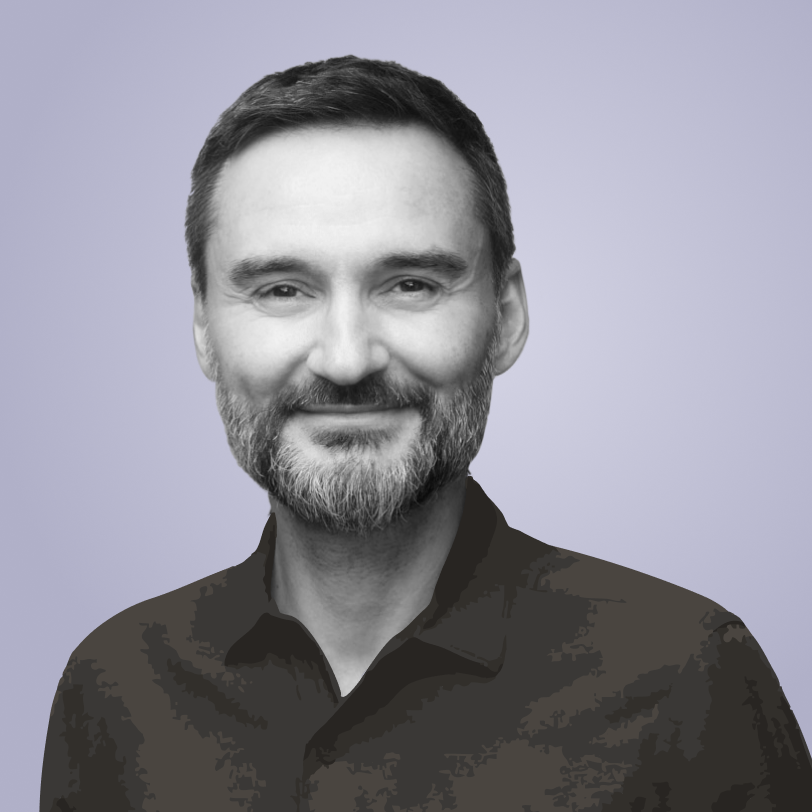
Think about the billions of hours humans waste every year commuting. We’re giving some time back to humanity.
Autonomy supplier to all
In 2024, Wayve announced a $1 billion raise led by SoftBank, with Microsoft and NVIDIA joining as investors — then the largest funding round ever for a European AI startup.
“Masa was a strong advocate for autonomous driving, but he believed that there had to be a different approach," says Kentaro Matsui, a SoftBank managing partner. “When I showed him Wayve’s end-to-end approach, it immediately clicked with him. He got very excited that this was going to be a scalable approach to self-driving.”
The capital infusion fueled rapid expansion. Wayve now employs roughly 1,000 people, including 75 researchers focused on advancing the science and 500 engineers working on the product. Before 2024, Wayve had operated only in the UK. It has since tested its vehicles in more than 500 cities globally, more than any other AV developer. Through an international roadshow, Wayve demonstrated how a system trained on London’s chaotic streets could handle Tokyo during a typhoon, navigate Germany’s autobahn, and adapt to American suburbs without extensive retraining.
“We’ve really reached an inflection point,” says Erez Dagan, who joined the company as president in 2023 after two decades leading product and strategy at Mobileye, a pioneer in automotive AI that was acquired by Intel in 2017. As exciting as the ability of the technology to succeed in new cities, Dagan says, is its ability to adapt across vehicle models and manufacturers with minimal adjustment — a single neural network working with different sensors, different architectures, and different brands.
“Our challenge now is establishing ourselves as a high-integrity automotive supplier with the technical integrity, dependability, and reliability that carmakers demand,” Dagan says.
Rus adds: “In theory, we knew the model would generalize, but now we’re seeing it. It really is becoming more like a human that can handle different cars or different locales with minimal adjustment.”
Others are seeing it too. Tesla, for example, rebuilt its Full Self-Driving using an end-to-end approach similar to Wayve’s. And Sophia Tung, editor-in-chief of Ride AI, a newsletter covering the autonomous driving industry, says that while end-to-end is not the dominant approach, it’s quickly gaining acceptance. “We know from general information out there that even Waymo has been moving more toward a more holistic, end-to-end approach,” Tung says.
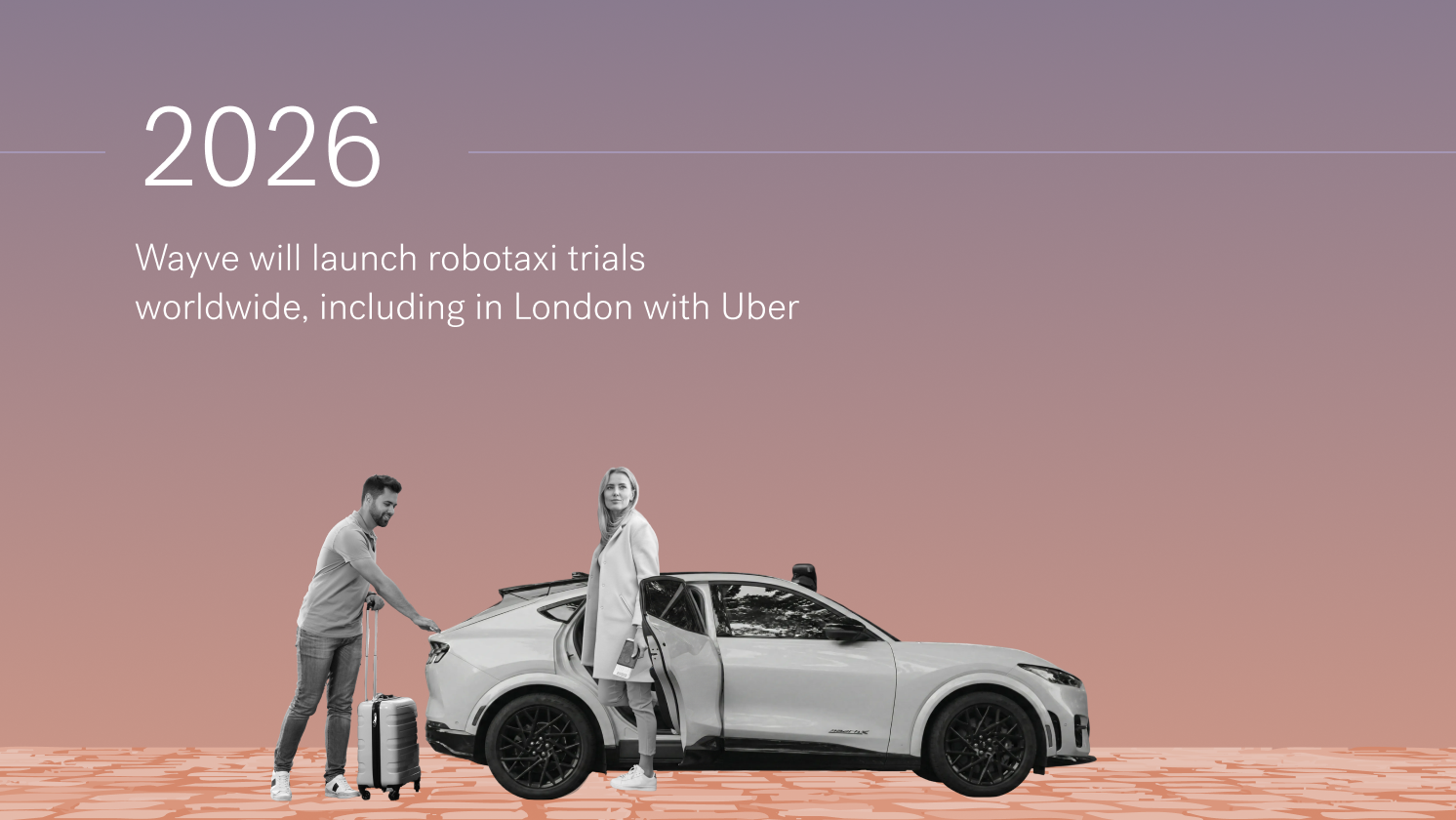
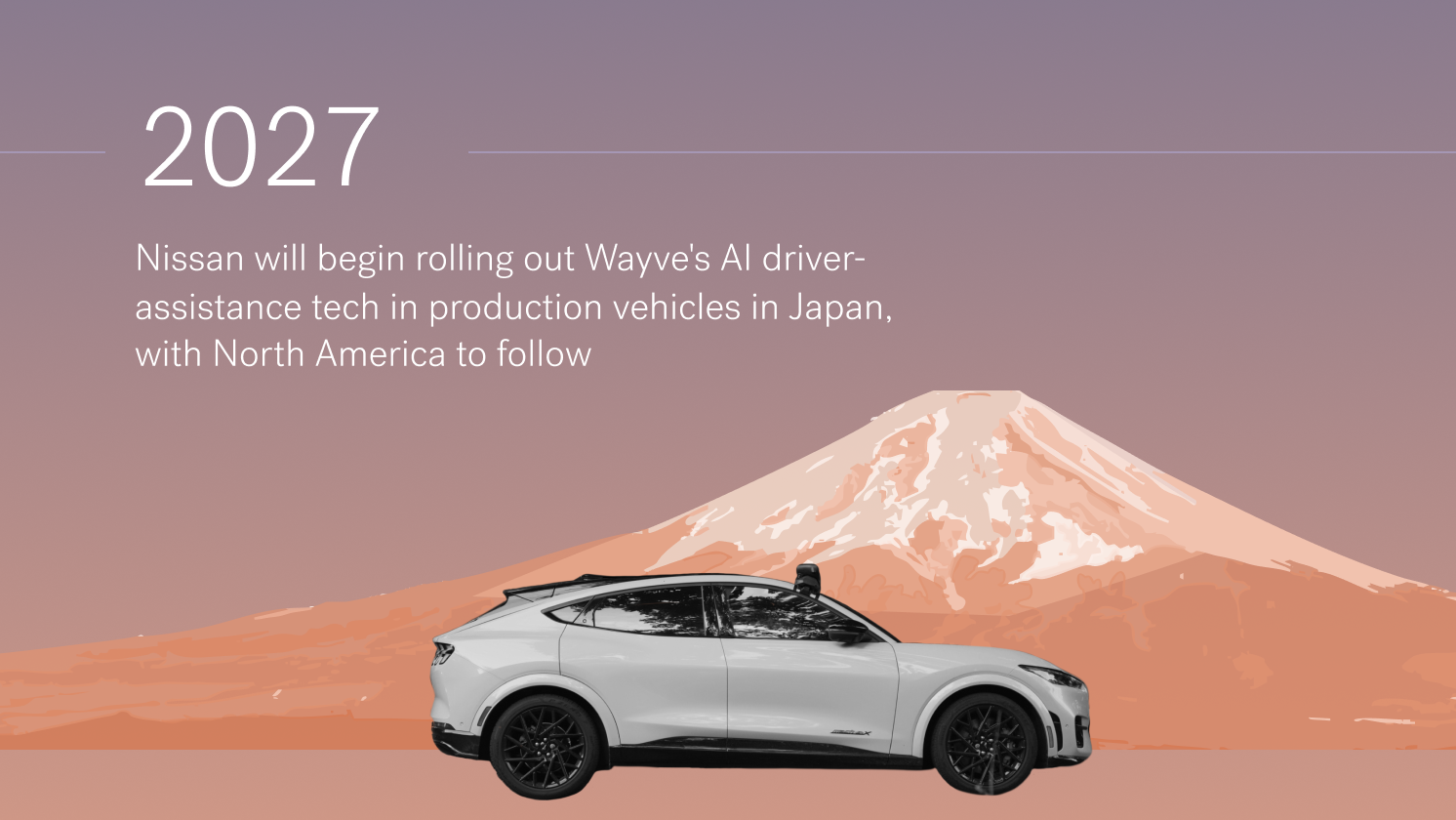
One factor accelerating Wayve's commercial prospects: Tesla. “Tesla is creating market pressure and proving end-to-end superiority very directly,” Dagan says. Consumer demand for Tesla’s FSD has put pressure on other automakers to offer similar capabilities. Wayve can deliver those capabilities. “We’re an independent software player that can take our model and put it in any car,” Dagan says, who added that the company is in conversations with 16 automakers about integrating Wayve’s technology — essentially every major carmaker outside China. Nissan has already committed to incorporating its driver-assistance software into its vehicles starting in 2027. This year, Wayve will be running robotaxis on London’s streets in partnership with Uber.
A contrarian’s playbook
- 1
Build outside the industry bubble: Growing up in Cambridge and London made it easier for Wayve to push back against Silicon Valley’s conventional wisdom.
- 2
Turn resource constraints into a competitive advantage: Wayve lacked the millions of miles of data and billions of dollars of its rivals, so it out-innovated them.
- 3
Solve the hardest problem first, not last: Learning to navigate London was Wayve’s acid test, making it easier to go everywhere else.
- 4
Maintain deep research capability even when small: There are no shortcuts to solving hard AI problems; you need the sharpest technical minds.
- 5
Sustain conviction through the long grind: Success, especially when charting your own course, won’t happen overnight. Grit and enduring confidence in your approach are essential.
Intelligent machines beyond AVs
The immediate opportunity is substantial. Licensing driver-assistance software for thousands of dollars per vehicle to manufacturers selling millions of cars annually translates to billions in potential revenue. But Kendall's ambitions extend well beyond automobiles. The same end-to-end learning approach that’s proving itself on roads could revolutionize how machines operate in factories, hospitals, farms, and homes. “Wayve can become the platform that enables robot manufacturers to build the intelligent machines they dream of," Kendall says.
The contrarian bet that seemed risky in 2017 has positioned Wayve at the forefront of a technical shift. If Kendall is right, cars are just the beginning — the first domain where end-to-end machine learning escapes the lab and enters the physical world at scale. The real prize isn’t just teaching cars to drive themselves. It’s building the operating system for the age of intelligent machines.