Emergent brings vibe coding to Main Street
The breakout AI startup is enabling small business owners to turn their ideas into custom software
Emergent brings vibe coding to Main Street
The breakout AI startup is enabling small business owners to turn their ideas into custom software
The bakery owner in the Philippines had used Emergent to build his first website. Previously operating as a storefront only, his bakery had begun taking online orders for custom cakes. He had contacted customer support because he was having trouble loading some of his inventory information.
Mukund suggested a possible solution. “Just do a rollback, and it’ll delete your Git history,” he said.
Silence.
“Have you done programming before?” Mukund asked.
The baker admitted he wasn’t entirely sure what programming was. Mukund was taken aback. When he and his brother Madhav were building Emergent’s technology, they assumed their vibe coding agents would be used by people who were at least semi-technical — product managers or user experience designers at startups, perhaps, or developer teams at larger companies looking to build custom software faster. Neither brother had considered that a small business owner with zero technical background would independently build a working website and online ordering system.
And, it wasn’t just the bakery owner. Everyone Mukund spoke to in those first few days — including a mom who created a family movie app and a screenwriter at Pixar — had no coding experience whatsoever. “This was so crazy to me,” he says. “But that’s when the magic clicked for us.”
Zooming in on an underserved market
To Mukund, the opportunity to give ordinary people the ability to create software felt transformative. “The person who understands a problem the best has almost never been the one to build the technology to solve it,” he says. “There’s always someone in the middle — a software developer, an agency. Now, for the first time, people who aren’t technical at all can build the solution themselves, bringing the ideas in their heads to life.”
Mukund and Madhav — who goes by Maddy and serves as Emergent’s CTO — moved quickly to refocus the then-Bengaluru-based company around what looked like a vast and underserved market. At the time, most vibe coding companies were targeting software developers, tech startup founders, or non-technical employees at large enterprises. The brothers set their sights on the millions of small business owners and entrepreneurs with ideas for how to modernize, expand, or run their operations more efficiently, but who had always been held back by the cost and complexity of building or buying custom software.
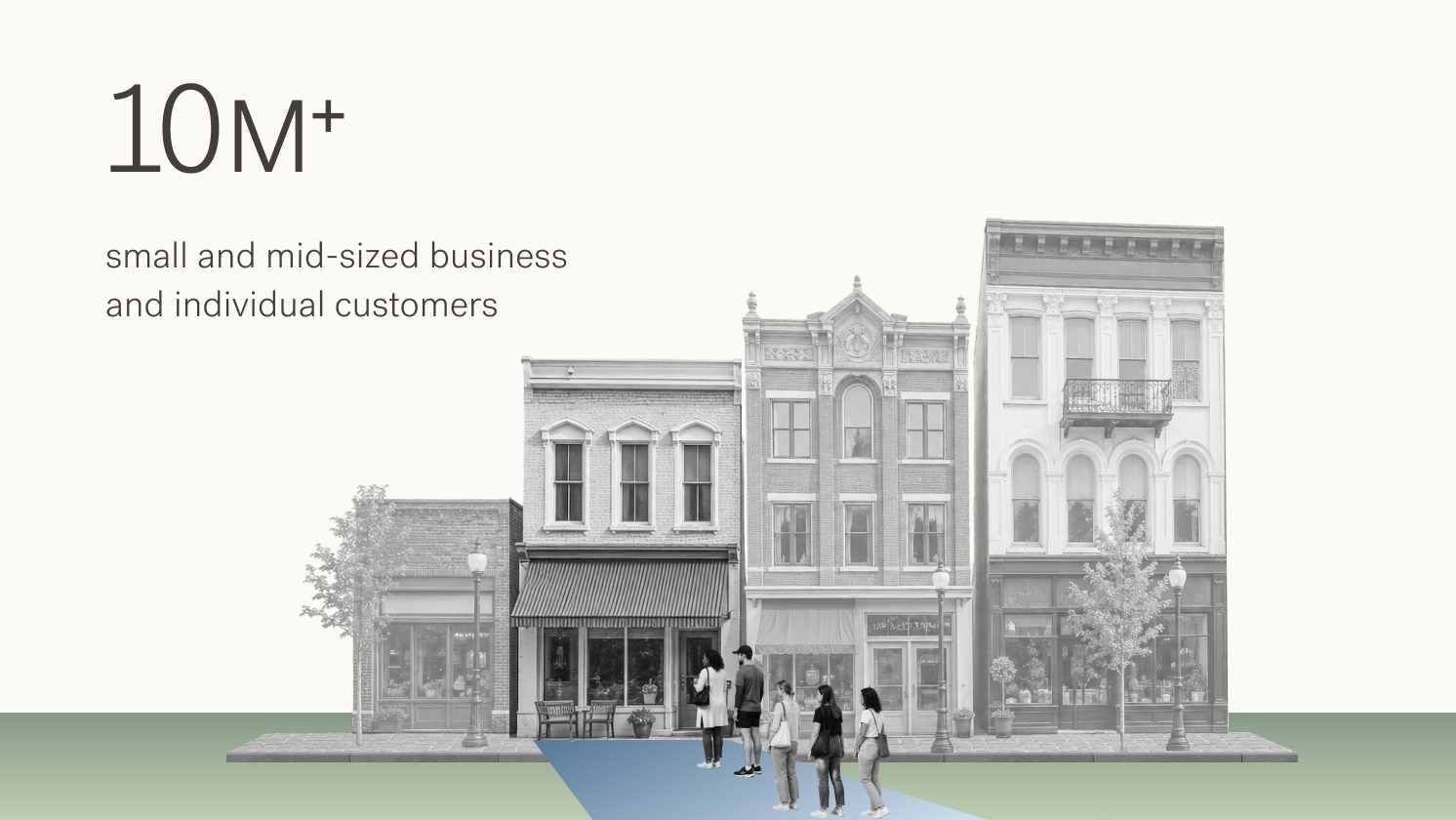
“From talking with our users, we realized this segment is a really big opportunity,” Mukund says. The estimated 400 million small and medium-sized enterprises (SMEs) worldwide account for approximately 90% of all businesses, 70% of employees, and 50% of global GDP, according to the World Economic Forum.
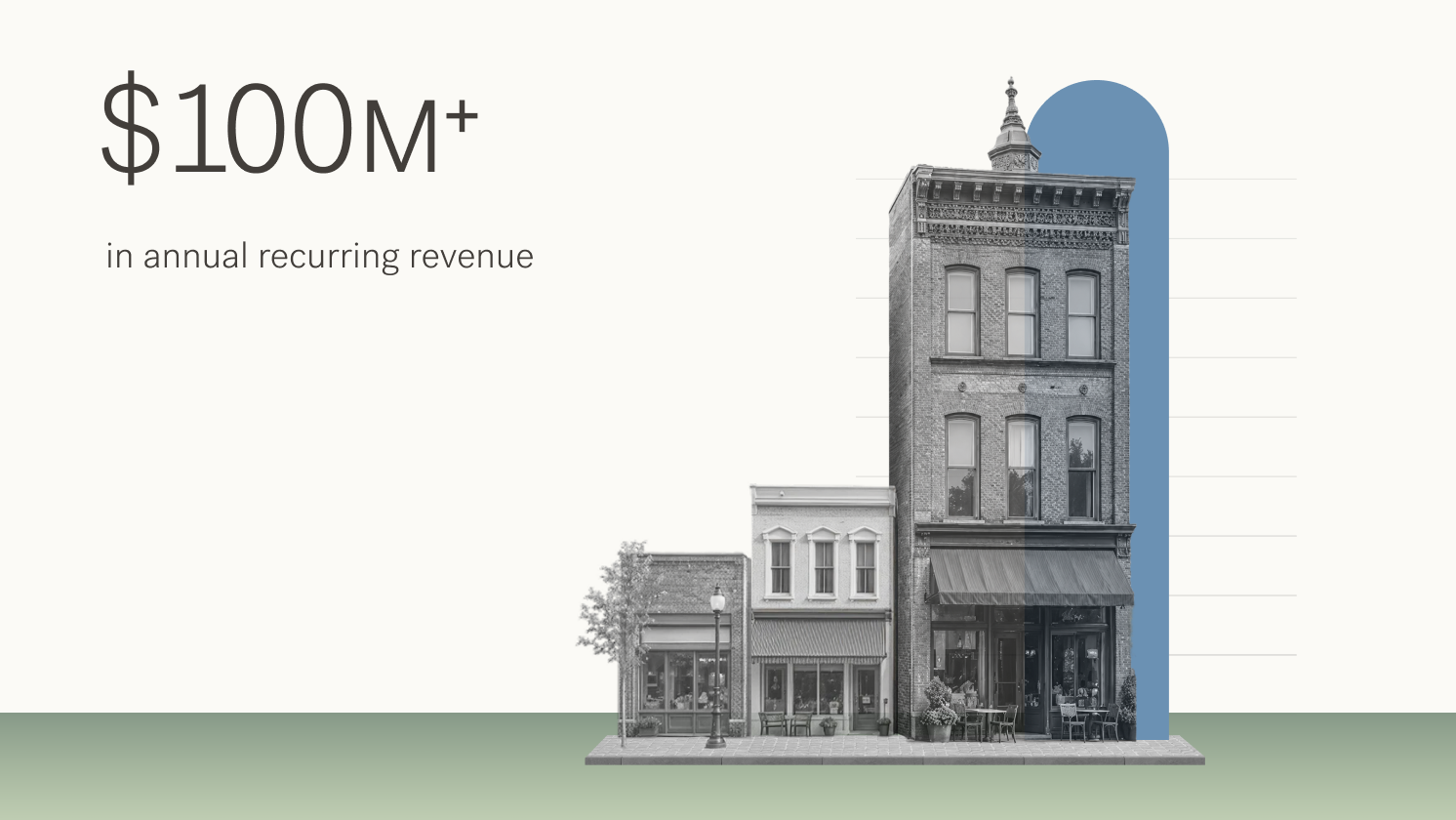
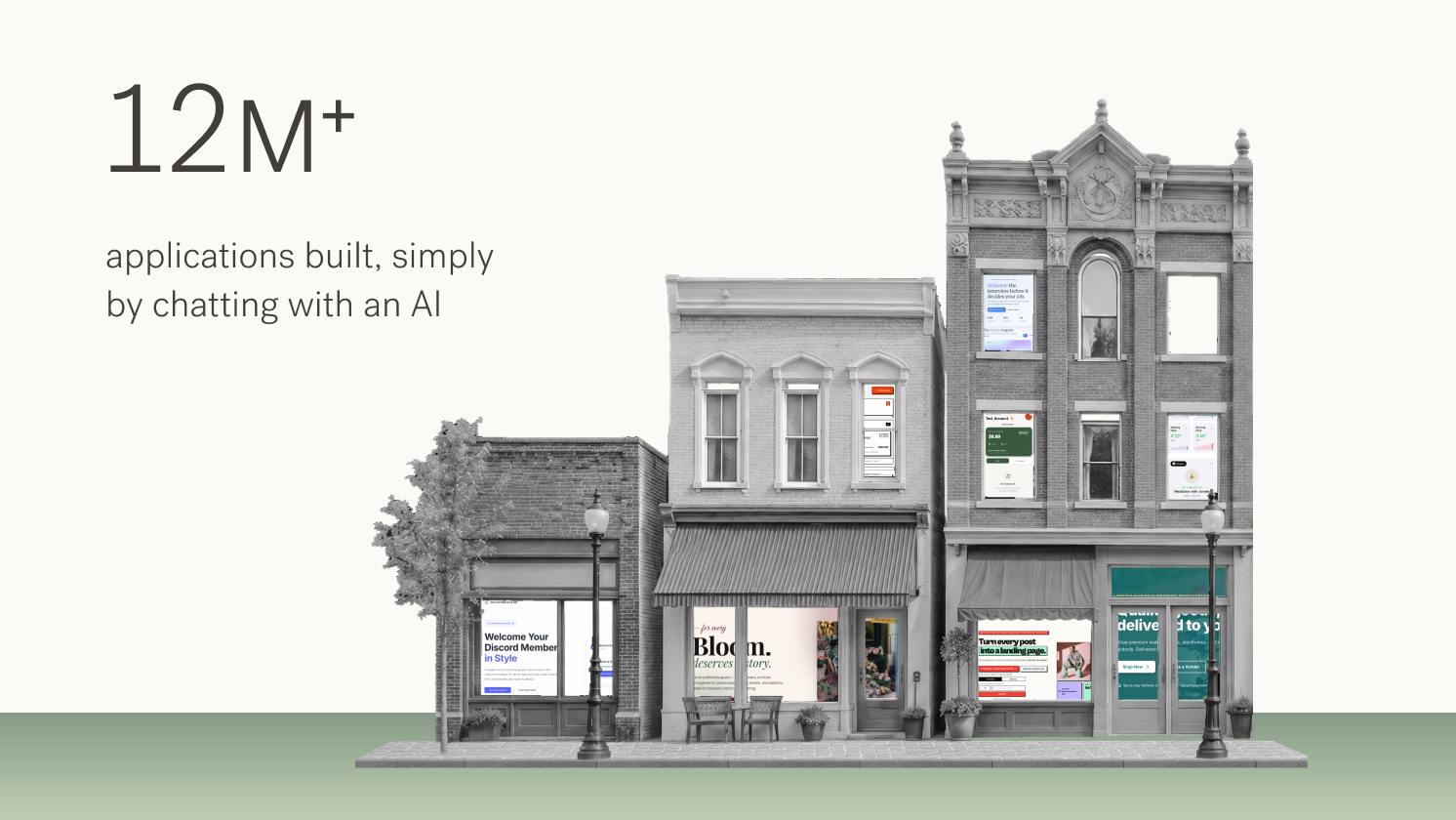
Since its June 2025 launch, Emergent has grown at a blistering pace, reaching $10 million in annualized run-rate revenue in just two months and surging to $100 million in eight. Already, more than 200,000 paying users have used the platform to build applications, simply by chatting with an AI. Nearly 80% of these users have no experience writing software code.
For Sarthak Misra, a partner in SoftBank’s Mumbai office, the more meaningful measure of vibe coding’s success lies in the value the technology creates for customers. Before SoftBank led a Series B investment in Emergent in January, Misra and his team talked to nearly two dozen Emergent users. “We do not think Emergent should be viewed simply as a website or app builder. The bigger opportunity is to become the software layer for small businesses, helping them not only build and run custom applications, but increasingly use AI agents to execute day-to-day work across functions,” he says. “It’s still early, but in a very short time, the Emergent team has shown an ability to listen closely to what small businesses need and deliver a vibe coding platform that lets them create it.”
It also helps that the company has two founders who trust each other implicitly. Misra sees Mukund and Maddy’s relationship as an advantage in a market moving at extraordinary speed. “Being brothers is a compounding factor,” Misra says. “When you understand each other that well, you can get to alignment faster and see each other’s blind spots. That’s incredibly important for any company trying to operate at the pace of AI.”

Now, for the first time, people who aren’t technical at all can build the solution themselves, bringing the ideas in their heads to life.
A brotherly bond
The Jha brothers’ earliest collaborations date back to their childhood in India, where they grew up as triplets. Their sister, also a computer scientist, lives in Australia and isn’t involved in the company. At 12, the boys made their first foray into programming. They had asked their father for video games. He handed them a C++ programming CD and instruction manual instead of the video games they wanted. “He told us we could make our own games,” Mukund says. The first one they built was a computer chess game.
The experience was addictive. “It was the first time we realized we could express ourselves by actually building things,” Mukund says. “That feeling has stayed with us.”
The brothers shared similar interests but not the same temperament. “Maddy was the high achiever, and I was the troublemaker,” Mukund says. “I was skipping class and always questioning everything. I’d get comments like, ‘Why can’t you be more like your brother?’” He looked up to Maddy anyway. “At some point, I just decided to follow in his footsteps.”
Both brothers studied computer science in India before heading to the U.S. for their Ph.D.s — Mukund at Columbia, Maddy at Penn State. After that, their paths diverged. Mukund dropped out of his doctoral program, spent several years at Google, and returned to India, where he launched a series of startups. One of them, Dunzo, helped start India’s quick-commerce delivery category and became enough of a cultural fixture that “Dunzo it” entered the vernacular. But rapid growth outpaced unit economics, fundraising dried up, and the company eventually shut down.
Maddy finished his Ph.D. in theoretical computer science, spent time at Sandia National Labs, then moved to the Bay Area and worked at a string of technology companies including Zenefits, Amazon, and Dropbox. Despite the distance and different career paths, the brothers talked constantly, trading ideas about new technologies, ranging from cryptocurrencies and EVs to machine learning, and the businesses that could be built around them. “One of our problems is that we have way too many ideas,” Maddy says.
The brothers had always wanted to collaborate on a startup, but the timing had never been right. That changed in 2023, when Mukund was trying to figure out what came next after Dunzo’s shutdown. He flew to the Bay Area to spend time with Maddy, who was on paternity leave with his three-month-old daughter. The brothers took long walks around the neighborhood, with Maddy lugging his sleeping daughter in a carrier, talking through ideas the way they always had. By the end of those walks, they had made two decisions: They were going to build a company together, and it was going to involve AI. They believed the large language models that had emerged over the past year were far more capable than most people realized.

We’re treating our agents as engineers. Giving them a workspace where they can do whatever they need makes them more accurate and able to create better software.
Building for a world that doesn’t exist
Being able to see around corners has been critical to Emergent’s success. In late 2023, Mukund and Maddy decided to focus their nascent startup on something that barely seemed possible at the time: using AI to autonomously perform tasks, or in Emergent’s case, automating software testing for developers. The phrase “vibe coding,” coined by former OpenAI researcher Andrej Karpathy in February 2025, was still more than a year away.
Nearly every VC they approached said no. “They told us, ‘AI can’t do that,’” Mukund says. “And they were right. At the time, chatbots could barely chat and everyone was trying to create a better chatbot. We were told to focus on that.”
But Mukund and Maddy weren’t deterred. They believed large language models were already capable of generating their own code, and that this capability would improve exponentially. “We felt that soon you’d have AI that could actually do a lot more things. We wanted to build in that direction,” Mukund says.
Three months later, working alongside two engineers they had hired, the brothers saw a slightly larger future than the one they had started with. They realized that the system they were building could do far more than test software. “We stumbled on this insight that if you were able to solve the verification part, you could automate all of software engineering,” Mukund says. Both brothers describe this as the moment that set Emergent on its current path, although each credits the other with having the insight first.
“Mukund felt that our quality assurance automation idea was a little too boring and small,” Maddy says. “He’s always pushing everybody to go bigger and faster.”
“Maddy is one of the most brilliant minds I’ve ever met, and he figured out how this problem was technically solvable,” Mukund counters.
Embracing constant change
Once the team had built a suite of AI agents that could automatically write, debug, and improve code, they did what most AI startups were doing at the time: They set their sights on enterprise customers.
That plan lasted a mere three months. Mukund had landed a pilot with one of India’s largest digital payments providers, but the process was painfully slow. The team found itself spending most of its time navigating security and compliance issues rather than building the product.
Meanwhile, something more interesting was happening inside Emergent. The company had grown to roughly a dozen people, and many of them, particularly those in non-technical roles, had started using the coding agents on their own. A project manager used them to build a clone of Asana. The head of talent built an internal dashboard for employee evaluations.
“We realized that non-technical people at the company were finding it almost more useful than our engineers,” Mukund says. “That’s when we thought, OK, why don’t we launch this to the world outside of software developers.”
That meant no code would be visible to users, just an intuitive interface where they could simply describe what they wanted to build. “We were betting that for customers, code is irrelevant,” Mukund says.
Building better tech and the agent experience
Many AI companies believe the path to success runs through building a better user interface. Emergent bet that for vibe coding to be truly useful, the underlying technology matters more. Much of its technological investment has gone into building a suite of agents capable of producing not only accurate and reliable applications, but also robust backend software that helps business owners run much of their day-to-day operations. That, Mukund says, is “the vision we are driving toward.”
A significant part of that effort, which Maddy credits to Saurabh Anand, Emergent’s head of product and a founding team member, centers on what the team calls “agent experience,” an approach that treats AI agents less like tools and more like collaborators. “We started putting ourselves in the shoes of our agents as if they were human,” Maddy says. “What kind of interface would an agent want to see? Is it getting overwhelmed? Does it work better with three or four tools rather than 70? Thinking this way allowed us to design our coding agents better and improve their accuracy.”
In practice, this has meant giving agents their own virtual laptops, dedicated environments where they can run experiments and get feedback on code they’ve written. Although software code is completely invisible to Emergent’s users, underneath the hood, teams of specialized AI agents work together to build, test, debug, and deploy each piece of software. “We’re treating our agents as engineers,” Maddy says. “Giving them a workspace where they can do whatever they need makes them more accurate and able to create better software.” These sandboxes are also part of a system for self-learning, he says, with Emergent’s agents designed to get better with each app they build.
Most customers who have used Emergent for ambitious projects have vibe coded their way to sophisticated software in stages. A year ago, Sushen Dang started out with a website revamp and a custom Shopify theme for the meal prep businesses he runs in Toronto. The process was easier than he expected, so he kept going.
He created a portal where customers for both Bitebox Meals, which delivers high-protein meals, and Two Punjabi for You, which provides Indian meals, could submit meal requests, skip orders, or update their delivery addresses — all tasks his team had previously tracked manually with spreadsheets. “The self-serve portal completely automated it, reducing customer calls by 60%,” Dang says. From there, he built software that automatically calculates the most efficient delivery routes for his drivers and tracks their locations in real time. Next, he conjured a full CRM to manage customer accounts, subscriptions, and billing.
“It’s serious stuff,” Dang says. “It’s not a fun app or a new website anymore.” The impact on his business has been meaningful: a 10% to 15% increase in revenue and a $2,500 monthly reduction in subscription fees for software. He estimates that getting a development shop to build all this software would have cost at least $50,000.
Emergent’s playbook for creating in the AI era
- 1
Build for tomorrow: Design your product and technology around what AI will be capable of six months from now, not just what it can do today.
- 2
Treat change as the plan: AI capabilities, customer expectations, and competitive dynamics are evolving rapidly. Expect your product and its place in the market to change repeatedly, both before and after launch.
- 3
Learn from your users: You may have an idea for who will use your product, and how. But user adoption and feedback will tell you where your product-market fit really lies.
- 4
Set unreasonable timelines: Impossible goals force teams to challenge assumptions and unearth new answers. The intensity inspires camaraderie and a shared sense of mission.
- 5
Deliver tangible value: Great AI products aren’t just elegant interfaces on top of LLMs. The real differentiation comes from technology that supports robust functionality on the backend.
Talking in code
Value isn’t always quantifiable. For many customers, the ability to have tailor-made technology that they can update or tweak whenever they want, on their own terms, is more rewarding than it might seem.
“I’m changing things on our website almost daily,” says Martin Raynov, co-founder of SSF Detailing, a car detailing and ceramic coating company in South Florida. “I just go onto Emergent and say, ‘I need to increase the pricing for these products,’ and it does it right away.”
For Raynov, a recent business management graduate of the University of Florida, being able to make these kinds of changes without any meetings or back and forth with an external development team or a third-party vendor is worth its weight in gold. “It means I have more time to work on what I really want to be doing, which is growing the business and supporting the four new locations we recently opened,” he says.
Mukund says this kind of flexibility completely changes the experience small businesses have with apps.
“With traditional software, you just get one version,” Mukund says. “So you have to adjust your business to the software rather than the software adjusting to your business.”
Mukund believes the new vibe coding model, where business software is perpetually dynamic and customizable, and where anyone can use AI to “speak in code,” will usher in a profound transformation — and create a massive opportunity.
“Everyone sees the explosion in vibe coding and thinks we’re at peak hype,” he says. “On the contrary, I think we’re at Bitcoin $1.”